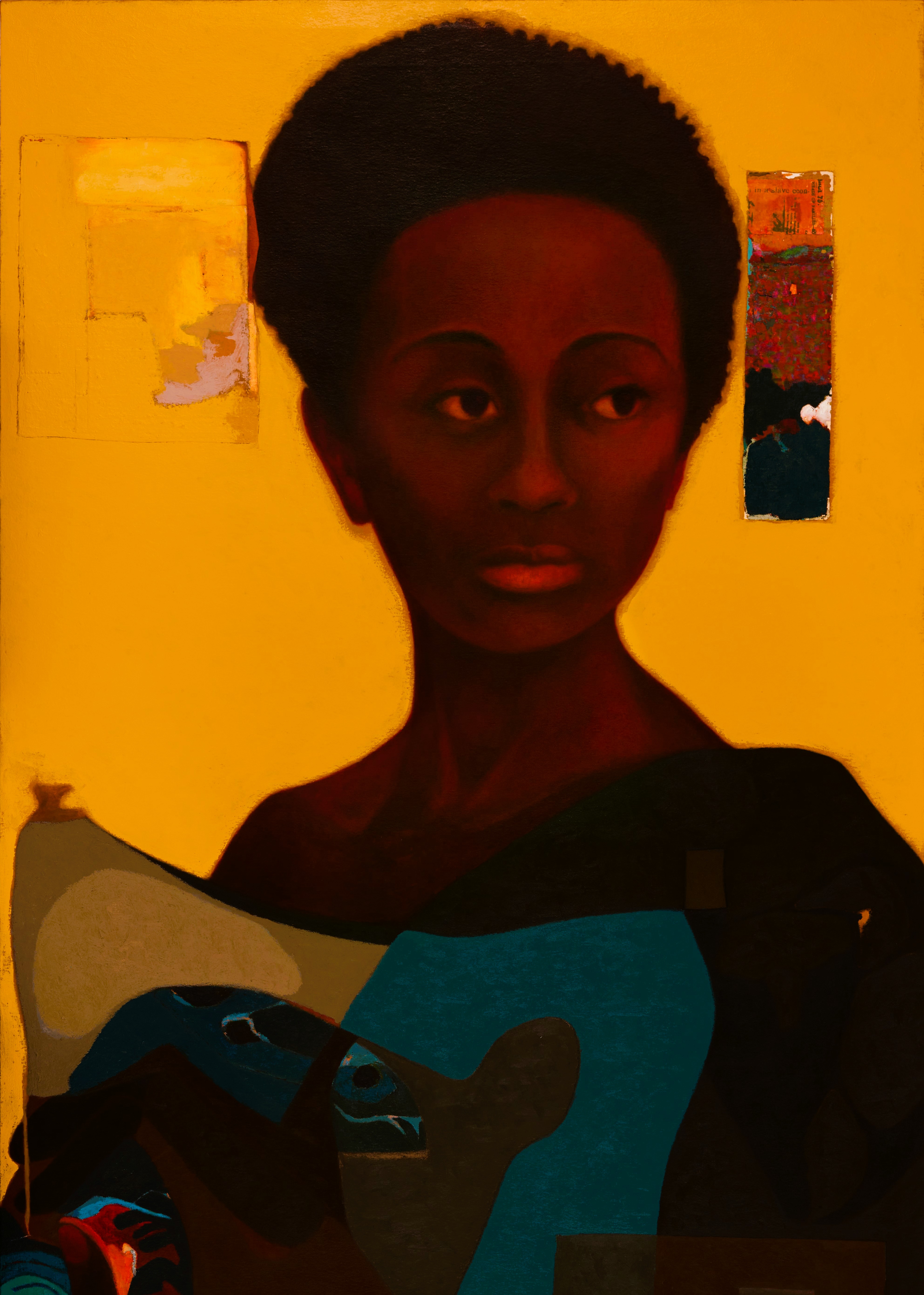
My art is influenced by the courage and bravery of a population of Blacks who lived free in this country amidst pre-Civil War slavery.
Like most people, I was taught what it meant to be Black in the pre-Civil War South from textbooks and teachers. I learned the South was populated by enslaved Blacks and free Whites only.
A decade ago, I heard about “free Blacks” living in the pre-Civil War South. I’d never heard of them living in the South before and did some research. One of my first finds was that free Blacks were recorded on the first federal census of South Carolina in 1790.
Shocked, I began researching free Blacks and found further startling evidence that contradicted what I’d been taught. There were records of free Blacks challenging the judicial system to uphold their rights, and of free Blacks petitioning courts about being overtaxed. The deeper I looked, the more evidence I found. For instance, there’s evidence that free Blacks preferred to live in the South over the North because they felt the opportunities to own businesses and provide for their families were better in the South.
My core beliefs about the south once centered around all Blacks being enslaved. Now I endeavor to increase people’s awareness of the fact that free Blacks have always lived there, and to give the truth of their existence a voice through my art.
Slightly Mixt
Kerry and Betty Davis Collection, Atlanta, GA
Tri-racial isolates* is a term coined by Virginia Easley De Marce. It refers to people whose ancestry was a mixture of free Black, Native American, and White, who lived together on settlements in the early South.
When census enumerators began their counting of America in the spring of 1789, this teenage girl and her family would have been counted in the “All Other Free Persons” column.
She is unaware of the history being documented, she’s simply wheel barreling her share of chores on her family’s settlement in St. Johns Parish, SC.
Colonial to Kentucy
Oil On Canvas, 90X68, Year 2025
Free Blacks were horse racing pioneers more than a century before the first Kentucky Derby. They helped build a foundation for the sport in the United States.
Eady envisioned jockeys through time, from the first colonial riders to Black jockey winners of the early Kentucky Derbies. He added census information and a partial petition as reminders of the everyday indications of free people of color.
The painting includes the first winner of the Kentucky Derby, Oliver Lewis 1875 (middle), of the 15 riders 13 were Black. The painting includes winners from following years.
Afros and Banjos
Black Jockey of 1790
National art exhibit, Barrett Art Center, NY
The sport of horse racing was introduced to America during colonial times. It is the longest running sport in America, but few are aware that most of the first jockeys were Black.
Eady explores what it might have been like to care for a horse then ride it to victory. He chose to use an abstract image of a jockey to represent how a jockey might have appeared in 1790. An early newspaper article gives a peek into their existence.
American Jockey
Permanent collection, Appleton Museum
Ocala, FL
Looking Back
Griffin Museum, National Exhibit, Honorable mention, mixed media, 48×88, Year 2025
Before the second industrial revolution clothes were primarily made by hand, seamstress occupations were mostly held by slaves and free Black women.
The presence of Irish immigrants increased in America after the Revolutionary War, with a heavy influx in the 1840’s to Charleston. Free Black women apprenticed themselves to learn the craft of needlework to become seamstresses, which resulted in Irish women competing for the same jobs once dominated by Black women.
In this painting a self-liberated seamstress is shown looking back as she stitches forward.